Thursday, July 30, 2009

The Half Way Point

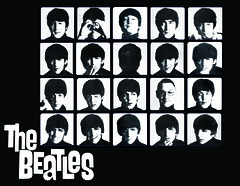
The BeatlesThe Beatles via last.fm

As July ends, we hit the unofficial half way point in Summer 2009. So, that brings a certain period of reflection on my part. ["That's your excuse?", says my wife] Yes, I-get-to-reflect. So, I'll answer a question that's been rolling around in my dizzy head (allergies... don't ask). This one is from my children, "Dad, why do you have the same songs by different artists on your iPod?" Obviously, this is a more serious query than the usual like of world hunger, global warming, or anything that octo-mom has to say. Well kids, I must really like them or I wouldn't have not them on my portable player. But to give you an answer worthy of sorts, I've placed them (along with my thoughts) below. And in the spirit of bloggers Moondancer, Jen, and Corey, I've kept the discourse to a half-dozen.

➠ Are any of these your favorites, too? Yes, but in another version not listed here? Post your answers in the comments or in a separate blog post of your own (just leave a link as I would like to read them). Think of this as another version of "A Midsummer's Night's Dream", and wax on:


Cover of Cover of Revolver [UK]

Written mainly by Paul McCartney (and credited to the writing team of Lennon-McCartney) in 1966. Released on the seminal Revolver album, it can be argued that it is a prime example of the group moving away from just being a popular musical act to one that would seriously impact and influence music as a whole. The string arrangements by George Martin, and the lonely, heartfelt lyrics by McCartney on this album cut make it a listener stunner when taken in and fully appreciated. Among all of the artists who've covered this song (and that includes a whole lot from 1966 - 2008), it's a credit to the genius that is Ray Charles that his rendition continues to have similar impact among music fans. His more bluesy take is sadly beautiful to The Beatles' beautifully sad interpretation (if that makes any sense... remember I'm on antihystamines as I write this). Both are head and shoulders above any other versions (in my head), and are my favorites.


Dee Dee SharpDee Dee Sharp via last.fm

Written by Eric Stewart and Graham Gouldman of 10cc in 1975. I find the original song intriguing for its technique of laying down multiple tracks and the creation of its virtual chorus within them. Plus, its keen sentiment of one trying to delude themselves of what they're feeling is a great exposition of that never-ending and universal human trait. This is another song that has been covered by a lot of artists (including Richie Havens, The Pretenders, and even Donny Osmond). But, as enjoyably downbeat as the original can bring the listener (both lament and love start with the same letter, now don't they?), I have Dee Dee Sharp's 1976 rendition to bring me back up. Her rendition starts deceptively slow, but it builds in resonance, vocal power, and defiance by the song's end. Her holding the throaty long "timmmmme" note proves this woman will not be held down by love's hiccup, or the song's lyrics. Considering that I'm a Joe Pike fan, its feint back but move forward sentiment is what makes it my favorite of the two.


jf_lmfImage by le0pard13 via Flickr


Largely written by Robby Krieger (but credited to The Doors as a whole) in '66. Released by them in 1967 (and even re-released in the turbulent year of 1968), the original hit #1 on many music charts. It's arguably the band's signature song, and one of the great emblems for that decade. I have the album edit on my iPod (not the shorten radio edit). The song, influenced by John Coltrane's harmonic progression, is almost one of those where you could say, "who didn't record a version of it?" As a fan of the great Shirley Bassey (her Bond movie songs are among my library stalwarts), her brassy vocals have little equal (at least for me). Her 1970 rendition of this caught me off-guard when I first heard it, and I fell for her interpretation and it's big (early Bond-like) orchestral arrangement. But, it's Jose Feliciano's 1968 take of Light My Fire that gets a lot of play out for me as I get older (and is the best known cover of this song). I agree with Wikipedia in that this remake:
... blended Latin influences, including a mixture of classic Spanish guitar and flamenco, with American pop sounds...
If I get to choose some of the songs for my funeral, put this one on the includes.


Cover of Cover via Amazon

Written by Phil Medley and Bert Russell, this song was first recorded in 1961 by the Top Notes (and is not a favorite version of mine). It was first popularly recorded by the great Isley Brothers in 1962, and this song established their unique sound and put them high on both the R&B and Pop charts. The 8-year old in me can still recall first hearing this song on the radio from a neighbor's house near my grandmother's home. But, it is The Beatles take of the same song (in 1964) that really made me appreciate it. That, along with John's wonderfully raucous lead vocal on the piece. So memorable it is (along with its stirling music and direct lyrics), that it has made it into various other media: TV shows (e.g., A Different World) and film (e.g., Ferris Bueller's Day Off). Twist and Shout has been covered by The Searchers to the unexpected take by the legendary Mae West. But, these two remain my favorites.


Written by Bob Dylan in 1969. The author's original take in the same year did much for me in that I hadn't paid much attention to the artist Dylan up to that point. Its clever musical hook of the "recurring four-note steel guitar riff" sucked me in, along with its suggestive lyrics (I was a hormonal teen by that time, mind you let's move on... nothing to see here). Covered by the likes of Hoyt Axton, the Everly Brothers, and Isaac Hayes, it has a good crossover among its followers. But, the cover I have is done by the Brothers Isley from there 1971 album, Givin' It Back. And it's a great interpretation on their part.


Le chanteur américain Chuck Berry en concert à...Image via Wikipedia

Written by the legend, Chuck Berry in 1956 ("in response to his sister Lucy using the family piano to play classical music when Berry wanted to play contemporary popular music"). Rolling Stone magazine called it a "masterpiece that helped to define the rock and roll genre." Though it's been covered by a plethora of artists, including Electric Light Orchestra and Iron Maiden, the first time it really caught me was listening (again) to The Beatles' version, released in the U.S. in 1964. George Harrison's vocals and Berryesque guitar play get me every time. I think you can tell it was a favorite of John, Paul, and George (and likely practiced & played who knows how many times from Hamburg to Liverpool). But in discovering this one song from my all-time favorite group, it led me to recognize and appreciate the great guitarist, singer, songwriter by the name of Charles Edward "Chuck" Berry. Without him, who knows where rock 'n roll goes (his impact cannot be minimized). Ah, hell. Let John Lennon say it more clearly:
If you tried to give rock and roll another name, you might call it 'Chuck Berry'.
Look him up, kids. Inducted into the Rock and Roll Hall of Fame on its opening in 1986. Number 5 on the Rolling Stone list of the 100 Greatest Artists of All Time. Number 6 in their 100 Greatest Guitarists of All Time, too.

Whew... I'm going to lay down now (but with my headphones on).

Reblog this post [with Zemanta]

Sunday, July 26, 2009

Appreciative Review: Unforgiven

Earlier this month, movie blogger Mr. Peel examined John Wayne's final film, The Shootist. And within the post of that 1976 film (directed by Don Siegel, the influencial director of The Killers and Dirty Harry), he initially linked it to the popular (but Oscar forgotten) Gran Torino:
"Looking around the net, I can tell that I’m definitely not the first person to link Clint Eastwood’s GRAN TORINO with THE SHOOTIST, the last film John Wayne ever made, but the point still seems worth making."
If you're familiar with either of those films, the connection is clearly evident. Especially, the legion of Eastwood fans. Thought provokingly, Mr. Peel expanded the relationship of these western icons by associating The Shootist with the (justly deserved) Best Picture of 1992:
"How many films better than UNFORGIVEN have there been in the past twenty years? Not very many, I’d say."
Since Unforgiven is one of my all-time favorite films (whether it's a western or not), that post (and sentiment) necessitated that I, once again, re-screen it. For many years prior, my favorite Clint Eastwood western was The Outlaw Josey Wales, which was released the same year as The Shootist. But in 1992, all of that changed (at least for me). That was the year Unforgiven came out, and there will have to be something pretty significant to dislodge this film's achievement from my mind--though TOJW remains a close second in the western category. What makes this film so great are the star/director, supporting cast, cinematography, and story are so well matched as to create a film for the ages.
Schofield Kid: "Ned, we could kill them tomorrow."
Ned: "I dont' kill nobody without him."
Schofield Kid: "We don't need him, the two of us could do it. Besides, he ain't nothin' but a broken-down pig farmer."
The story is one that works on many levels. It begins with one insecure cowboy and a prostitute of Big Whiskey, Wyoming that cascades into an unforgivable act of violence. It'll be one savage deed that'll beget more when all is done. The local sheriff, "Little Bill" Daggett (Gene Hackman in top award form), has a less-than adequate consequence for the cowboys involved--especially for her fellow prostitutes led by the fierce Strawberry Alice (Frances Fisher). Thus, this group of women will look outside of the law (since it's done nothing for them and their mutilated cohort) in search of justice. Additionally, the tale takes the more modern approach in its realistic depiction of violence and its aftereffects, and away from the mythic of westerns past (of which Mr. Eastwood has shared in). To the filmmakers credit, though, it is not an entirely grim tale. The use of humor is effective in its counterpoint throughout this yarn. But even so, I'd go as far to say that this film strays into the realm of film noir for the way it frames its drama.

And so, a word-of-mouth bounty of $1000 is placed on the trails and in the ears of any 'randy' cowboy or passersby that come in for a game of billiards in Big Whiskey. "Hell, the word has probably gone all the way down to Texas by now", is what Little Bill surmises after learning of the women's bounty. This promise of a sum paid for a killing will find its way to two avaricious groups. The neophyte in the game is the Schofield Kid (Jaimz Woolvett). The Kid will eventually uncover one William Munny (Eastwood), a poor, widowed Kansas pig farmer trying to make ends meet for his two young children. He's heard, in passed down and whispered tales, that Munny was one of the most cold-blooded bounty hunters there ever was. A "... known thief and murderer, a man of notoriously vicious and intemperate disposition" that he concludes would be an asset to have for the quest ahead.

However, Little Bill plans on making a vicious example of them to send a counter message for those on the trail. The build-up for the inevitable confrontation between the good man (trying to prevent a deadly payback) and the bad man (seeking a payday for the betterment of his children) is done with great care, here. But, the first to regret their involvement will be English Bob (the late Richard Harris) as the older colorful, haughty gun-for-hire that also comes looking to collect - along with his dime store biographer (played by Saul Rubinek). Later, it will be more so with Munny's longtime friend and partner, Ned Logan (the always great Morgan Freeman) - which is foreshadowed early on in the lingering, doleful expression of his Indian wife. Unforgiven, besides bringing a marvelous cast of lead and character actors together, has an absolutely splendid screenplay written by David Webb Peoples. It is quite a feat of elegant writing that can debunk the Western myths, as it does, but still come off heroic (though, in a ominous fashion).

Clint knew that when he obtained the rights to this screenplay many years prior. It's to his credit that he recognized it as such and was smart enough to hold on to it until he was the right age and maturity to bring it off as an actor, and as a director. William Munny is both very close and far aways from his earlier Man With No Name character. In Clint's eyes, he is the summation of him. His being is of a troubled man, one that was 'turned' from drink and violence years ago by the love of a good woman (she's only hauntingly referred to in the prologue/epilogue). He is a man struggling with his past, looking to avoid poverty (for his kids) and damnation (for his past deeds)--only to find he can't have both. He'll learn that the cost of violence, to twist a phrase by Mark Twain, "cannot compromise for less than 100 cents on the dollar and its debts never outlaw." Munny attempts at rejecting his past as he makes his way to Wyoming resonate, but have little weight by the time he reaches his destination. Eastwood, in my mind, has never really received his due as an actor (especially early on in his career). He looks like he doing little in his films, the term laconic is used much by critics. That is, until you realize he's been doing it all, right there in front of you.
Little Bill: "I don't deserve this."
William Munny: "Deserve's got nothin' to do with it."
Unforgiven, by rides end, will attest to the praise its earned. And, it will sharply come back on itself. This is the reason I listed this film as my answer to a question in Dennis Corralio recent movie quiz: "Favorite movie that is equal parts genre film and a deconstruction or consideration of that same genre." Little Bill, a good man gone bad, will have the audience pulling for the reformed bad man to take up the drink again and summon back the demon. And the real, unwritten dark legend will return, with consequences for all. Especially for Bill Daggett... Unfortunately, even with his skills as a lawman, he meets more than his match in a bad man who failed at being good. Violence and revenge, all without an 'Undo' command. At the climactic moment, in one of the best and simplest exchanges of the film, the essence of this becomes clear: Little Bill says, "I'll see you in Hell, William Munny." To which Munny knowingly replies, "Yeah." I used to think the film's title referred to the violent, stupid act at its beginning. But now, I believe its Munny's realization by story's end of his true legacy - that which cannot be forgotten, nor forgiven.

Another aspect of Mr. People's screenplay is that none of the main male characters are what they first seem. Munny's feebleness at farming, Daggett's folksy humor and prudence, English Bob's civilized manner, and Ned's nonchalanced return toward killing. Note the changes each character goes through by story's end - all are turned on their heads. Though, none of the men presented are entirely black or white--just a soul-robbing gray. It also should be noted that in this most noirish of westerns, cinematographer Jack N. Green accomplished an extraordinarily beautiful job. He etched a magnificient visual canvas for such a story and shot it mostly in the contrast of shadows and highlights.

Film critic Kenneth Turan said it best about Unforgiven:
"Simultaneously heroic and nihilistic, reeking of myth but modern asthey come, it is a Western for those who know and cherish the form, a film that resonates with the spirit of films past while staking out a territory quite its own."
This film won four deserved '92 Academy Awards (Picture, Supporting Actor, Director, and Film Editing), and was dedicated by Eastwood to his mentors, Don Siegel and Sergio Leone. Fittingly, Clint himself wrote the backbone theme of the movie, the haunting Claudia's Theme. Finally, the second-edition DVD, and newly minted Blu-ray Disc, offers an all new digital transfer, an excellent commentary track by film critic Richard Schickel, and a nice set of featurette and documentary extras. This is one of the most grim and dusky Best Picture winners ever (and only the third Western in film history to do so). But, IMO, it's also Eastwood's Dark Masterpiece.


Reblog this post [with Zemanta]

Thursday, July 23, 2009

"A website to the detriment of good film"

It's not always that I actually promote bad movies (heaven knows there are enough of them). But, in this case it's for entertainment value. The BadMovies.org web site goes out of their way to make sure bad movies and entertainment are synonymous. Their reviews are just this side of priceless (or at least for a chuckle or two). What other site would give the time of day to the unintentionally hilarious bit of celluloid masquerading as a 50's monster movie?

I actually remember The Giant Claw with similar fondness from my youth. I watched it on a black & white television at my grandmother's house one Saturday afternoon (sitting sideways on her living room arm chair, IIRC). And the BadMovies.org's review brought it all back (including my bad posture)--thank goodness I wasn't sucking one of those kid-size milk containers through a paper straw at the time or I would have really embarrassed myself!!! As each of them is, the review is sectional:
  • a Character list with all sorts of keen individual insights: "Pierre - A Canadian redneck! He is amusing, what with his jug of moonshine and irrational fear of giant birds. Of course, his phobia is not so irrational in a b-movie. The Giant Claw eats the poor, screaming, partially pickled fool."
  • a Plot description chock full of fine detail and note: "any movie bold enough to feature a GIANT ANTIMATTER SPACE BUZZARD is a movie worth watching."
  • Things I Learned From This Movie section: "The French Canadians are deathly afraid of Mexican food."
  • Stuff To Watch For: "59 mins (mark) - So Ford did try to design a flying car. Too bad that they based it on the Pinto."
  • Quotes: "That bird is extraterrestrial. It comes from outer space. From some godforsaken antimatter galaxy millions and millions of light years from the Earth. No other explanation is possible."

Add to this eager information audio clips, images, and sometimes video clips from the film itself. See, I told you their reviews have it all, and a bad movie! Come to think about it, I need to show this movie to my kids! I've since bookmarked this into my browser.

p.s., I found this site while visiting Mr. Peel's review of the movie PROPHECY.

Reblog this post [with Zemanta]

Wednesday, July 22, 2009

This Looks Nuts!


Tim Burton's Alice in Wonderland trailer. And how many do you suppose, when it's released, will attend in an altered state?

[Thanks to Pop Culture Nerd to notifying me that the previous YouTube video had been pulled by Disney, and for offering the alternative site. You're the best PCN!]

Update: Disney has killed the teaser trailer. Sorry about that. The trailer is back up.

Monday, July 20, 2009

Robert Crais' First Rule Sneak Peak

(photo © pop culture nerd)

If you're into Robert Crais, you have to check out Pop Culture Nerd's sneak peak into the new Joe Pike novel (coming in early 2010). Great stuff!!!:


Sunday, July 19, 2009

Quiz Time, Part Deux

Movie blogger Dennis Cozzalio has come up with another of his wonderful quizzes. This is entitled, Professor Severus Snapes' Sorcerer-tastic, Muggalicious Mid-Summer Movie Quiz. Whew... The rules called for all submissions to be made in the post's comment section (which I did), but I'll copy it here. Without further delay, below are my answers

1) Second-favorite Stanley Kubrick film.

» Spartacus (Dr. Strangelove or: How I Learned to Stop Worrying and Love the Bomb would be my first)

2) Most significant/important/interesting trend in movies over the past decade, for good or evil.

» remakes of good original films by talentless studio execs/producers

3) Bronco Billy (Clint Eastwood) or Buffalo Bill Cody (Paul Newman)?


» Bronco Billy - I love both, but Clint on a saddle, with a six-shooter, is as it should be

4) Best Film of 1949.

» Twelve O'Clock High

5) Joseph Tura (Jack Benny) or Oscar Jaffe (John Barrymore)?


» Joseph Tura (Jack Benny)

6) Has the hand-held shaky-cam directorial style become a visual cliché?


» So much so (not the least of which, causing me motion sickness while sitting still!)

7) What was the first foreign-language film you ever saw?


» Seven Samurai

8) Charlie Chan (Warner Oland) or Mr. Moto (Peter Lorre)?


» Mr. Moto (Peter Lorre) - though, I pick it because I like PL (not the practice of using stereotypes as performance art)

9) Favorite World War II drama (1950-1970).


» Patton (years ago it might have been River Kwai, but then I read more about the Burma-Siam Railroad and it changed)

10) Favorite animal movie star.


11) Who or whatever is to blame, name an irresponsible moment in cinema.


» Michael Bay for Revenge of the Fallen - the use of stereotypes/language for the twin characters Skids and Mudflap

12) Best Film of 1969.


» either The Wild Bunch or Butch Cassidy and the Sundance Kid - two diametrically different takes on the changing times in the West on those outside the law

13) Name the last movie you saw theatrically, and also on DVD or Blu-ray.


» Theater: Harry Potter and the Half-Blood Prince DVD: Harry Potter and the Prisoner of Azkaban Blu-ray: Serenity

14) Second-favorite Robert Altman film.


» The Long Goodbye (MASH is first)

15) What is your favorite independent outlet for reading about movies, either online or in print?


» IMDB

16) Who wins?
Angela Mao or Meiko Kaji? (Thanks, Peter!)


17) Mona Lisa Vito (Marisa Tomei) or Olive Neal (Jennifer Tilly)?

» Mona Lisa Vito (Marisa Tomei)

18) Favorite movie that features a carnival setting or sequence.


» Carnival of Souls

19) Best use of high-definition video on the big screen to date.


» Sin City

20) Favorite movie that is equal parts genre film and a deconstruction or consideration of that same genre.


» Unforgiven

21) Best Film of 1979.


» All That Jazz

22) Most realistic and/or sincere depiction of small-town life in the movies.


» don't feel qualified to judge as I've never lived in a small town, but ideally I'd like it to be It's a Wonderful Life

23) Best horror movie creature (non-giant division).


» Alien

24) Second-favorite Francis Ford Coppola film.


» The Godfather: Part II (The Godfather: A Novel for Television aka Godfather Saga would be first)

25) Name a one-off movie that could have produced a franchise you would have wanted to see.


» Gunn

26) Favorite sequence from a Brian De Palma film.


» Train station shoot-out (homage to Odessa Steps) from The Untouchables

27) Favorite moment in three-strip Technicolor.


» The move to color moment from The Wizard of Oz

28) Favorite Alan Smithee film. (Thanks, Peter!)


» Dune (Extended Edition)

29) Crash Davis (Kevin Costner) or Morris Buttermaker (Walter Matthau)?


» Crash Davis (Kevin Costner) - sorry, but Morris didn't end up with Annie Savoy (Susan Sarandon)

30) Best post-
Crimes and Misdemeanors Woody Allen film.


» Vicky Cristina Barcelona (I'm not a big WA fan)

31) Best Film of 1999.

» The Sixth Sense

32) Favorite movie tag line.


» Since I've been mentioning it lately, I'll go with the one from the highly underrated Hickey & Boggs:

» Raimi's The Quick and the Dead

34) Overall, the author best served by movie adaptations of her or his work.


» Shakespeare

35) Susan Vance (Katharine Hepburn) or Irene Bullock (Carole Lombard)?


» Irene Bullock (Carole Lombard)

36) Favorite musical cameo in a non-musical movie.


» I agree with commenter Bill C, the Anything Goes music dance number from Temple of Doom (the best thing in that movie)

37) Bruno (the character, if you haven’t seen the movie, or the film, if you have): subversive satire or purveyor of stereotyping?


» sorry, but both

38) Five film folks, living or deceased, you would love to meet. (Thanks, Rick!)


» Humphrey Bogart, Cary Grant, Bette Davis, Clint Eastwood, James Stewart

Thursday, July 16, 2009

Chasing Darkness Redux

Sometimes, when your anticipation is so high for a particular author's new work, finally reading it (though very enjoyable) does not necessarily equal savoring it. Last year at the start of July, Robert Crais released the latest in his Elvis Cole - Joe Pike series of books. And when it came out, I got my hardback copy soon after its release, early on RC's then book tour (along with Brilliance Audio's MP3 audiobook of the same work). Even had the man autograph my hardcover on his Mystery Book Store stop (I know... all of this really sounds needy to me, too). But Crais can simply write well, entertain and enthrall you with his characters, and pull you into a universe of his own making that you actually give a damn about.

So when I planned on taking a road trip down to San Diego to a attend the author's event at the Mysterious Galaxy book store (see below), I planned on re-listening to Chasing Darkness once more in audiobook. Though, this time it was going to be with my favorite narrator for this series. William Roberts has read the entire Cole/Pike books, with one exception: the great L.A. Requiem. However, he performs this for the BBC Chivers audiobook publisher in the U.K. (so only a few U.S. audiobook fans have heard him performing RC's characters) And Chivers only released CD in May 2009. Luckily, I received it in time to incorporate the experience into my L.A. to S.D. round-trip drive time. And it was well worth it.
Book bloggers Jen and Corey have also experienced this narrator distinct style, and I think they are somewhat taken by him (at least I think so). Although, it's interesting to note that the narrator for the U.S. audiobook publisher (Brilliance Audio) for this series, James Daniels, actually quit recording audiobooks after earning his law degree. But, he returned to the craft to record the newest in the Cole-Pike line. That should tell you something about how this series affects its fans (inside and outside the publishing business). As well, those who re-read (or re-listen) the books (like me) actually enjoy them more the next time around. Perhaps, it's due to the fact the subsequent take is not being pushed by the reader's anticipation. Let's call it the Heinz Ketchup effect. One can get into and through a book too fast, and miss or minimize the author's words.
Politics is like Oz, only you never see the magician behind the curtain.
Both Jen and Corey produced excellent reviews of the twelfth novel last year. Note: even Robert Crais does not differentiate the Joe Pike novel from the Elvis Cole novels--it's all part of the same universe. And when the new Joe Pike rolls out early next year, it'll be the thirteenth (my lucky number, BTW). However, I only left one comment to either in response to the reviews of the novel, Corey's, and mentioned that I found this book to be a very Chandleresque take on this series novel. Suffice it to say, his reply was wide-ranging and worth reading--and I should have put down a comment on Jen's equally wonderful review, too. Compounding this, I blew it by not subscribing to the post comments, so I missed Corey's reply and his query, "How about you?" D'oh! So, though I'm months late for either, here it goes for both of you: I look at the corrupting aspects that are so wonderfully woven into RC's latest tale. And here I'd can't say it better than how Jen put it:
From page one, Crais starts building up a theme of corruption in reality. There are evils destroying the world around Elvis. First the fires are burning his city. Then he receives news that his exterminator has found termites at his house, corrupting the foundation. A ransacking break-in even results in Elvis' Mickey Mouse phone being broken. Crais has to glue him back together, but you can still see the cracks...the damage. And the corruption continues to build up to the ultimate level of law enforcement and the government.
To me, that harkens back to Raymond Chandler's L.A.--the old power elite operating above those that give a damn (like those still hanging on to a code), and spreading their corruption downward. And I agree with you that "Crais is... more subtle than Chandler", but no less talented. Reading some of its reviews on Amazon, I equally agree that that subtlety is what many (not all) miss, especially in this instance. As well, RC's writing exhibits a maturity in the elegance of his wordsmithing. Crais doesn't need to dazzle the readers with his character's toughness and martial skills when he can intrigue us with his story's complexity, contrasts, and potent observations. His last paragraph proves the point, IMO. With a delightful coincidence (and the fun of listening to Roberts read it, which drove me to write this post), I finished this audiobook as I was about to cross back into Los Angeles County line while driving north on Interstate 405:
The darkness frightens me, but what it does to us frightens me even more. Maybe this is why I do what I do. I chase the darkness to make room for the light.
2010 can't come fast enough, now (oh, here I go again).
Reblog this post [with Zemanta]

Monday, July 13, 2009

Six for my Wife

Well, I just knew she-who-must-be-obeyed would bring this up, and my nostalgia gene was going to be the culprit. After reading my recent song post, she brought up the fact that I seem to be stuck in a decades-ago mindset. I guess I can't argue too hard on that one. The military geostrategist, Thomas P.M. Barnett, has said:

Morris Massey, an expert on conflict between generations, pioneered the argument. "what you are is where you were when ," meaning all of us reach a point in life where we discover a world larger than ourselves. At that point, we become cognizant of the morals we've developed across our early years, and those morals - or worldview - tend to persist across our adult years.

For most people, that fateful transition occurs in the teenage years, which explains our tendency to stick with the popular music of those years throughout adulthood.

Admit it - you stayed cool enough across your 20s, and maybe you faked it deep into your 30s, but then you woke up in your 40s and realized you absolutely hate your kids' music!

Don't worry. It happens to everyone.

So busted am I. I know I'm not alone in this. I'm sure there are countless number of (somber) males out there who've faced the same realization of when the female in their life proves their point (to their downfall). She even challenged me to post another six, this time for the last two years. Well, that's not going to happen because, for me, the song (whether old or new) and the moment have to percolate for at least that long for any of the engrams to form. Ooh... how's that for justification?!? So, I'll reach back a little further, dear, and grab some of the more recent music and memory commemoration--and yes, I can tie in old music with just over the hill events (I can do this because it is my blog, after all ;-P)

So, without further a do:

Have You Ever Really Loved a Woman? (1996), after the birth of my daughter in '99 I could relate with this Bryan Adams song--especially since I came to realize I was under the dual effect of two of the most important females in my later life (and under the same roof!)

The Year of the Cat (1976), this old Al Stewart hit played on the radio during a particularly beautiful stretch of California coast as I wound my way in a car to Pebble Beach in 2005 (for what was a turning-50-gift from my wonderful wife)

The Sweet Escape (2006), who haven't really heard this song till you've heard it being co-sung from the backseat backup singers that are my children (in school carpool); wooohooo yyyeeehhoooo!!!!!

Cool (2005), "Dad! You're not playing this song, again, are you?!?" - my kids; I guess my children don't really understand that I appreciate the direction and editing of this piece (and both the track and music video are on my iPod)

Just Dance (2008), okay, I lied. Musical memories don't take years to formulate--I watched this music video on Virgin America's seat entertainment system on our way to NYC (and the song kept playing in my head whenever we were in Times Square)

Tears In Heaven (1992), around the turn of the century, while looking at my sleeping children, I realized this Eric Clapton song and its lyrics would never again be just another tune

Sunday, July 12, 2009

Bob Peck Back on the Edge

There are a handful of made-for-television miniseries that I'll watch repeatedly (if they would show up again on TV, or on DVD). And there are still some I've yet to view. Some on the missing list comprise John Adams, Taken, and Tales of the City (and I hope to whittle it down). On the other side, there are some that I've seen and consider truly great (Roots, Jesus of Nazareth, Thorn Birds), but for whatever reason the repeat factor isn't there for me. So what does make that small repeat viewing list? Especially since they're on DVD, I include I, Claudius, Lonesome Dove, Band of Brothers, Tinker Tailor Soldier Spy, Captains and the Kings, and documentaries The World at War and The Civil War.

However, there is one that's been missing from that list for too long (at least of the DVD afficionados). And it has been rarely seen at all on U.S. screens since its initial release because it is a British miniseries. Luckily for the good many of us who have seen (and treasure) it, that'll be rectified (digitally) later this year. Edge of Darkness was a BBC serial drama that was released in 1985 (and later shown on American PBS television--though I saw it on the local independent (at the time), KCOP). It is really a quite remarkable and unique tale that is part drama, who-dunnit-mystery, detective narrative, ghost story, and political espionage thriller. Add a little Environmental-Nuclear Power tension and this series had it all.

Bob Peck as Ronald Craven in the 1985 eco-thri...Image via Wikipedia


Additionally it had an ideal British cast, with a couple of them to go on to larger fame because of it--and one very American character actor who'd dominate any of the scenes he was in. The late-Bob Peck is forever tied to this work, and for good reason. His ability to be both "tragic and intelligent simultaneously" in this six-part series raised him up from a stage and minor TV actor to one famous enough (due to the role of Ronald Craven) for Steven Spielberg to cast him as the game warden in Jurassic Park. The other characters of note play his dead daughter, Emma (Joanne Whalley in her debut), and the mysterious and not to be forgotten Darius Jedburgh (Joe Don Baker). And though it's been available in VHS and on Region 2 disc, it'll make its US DVD release on November 3, 2009.

Needless to say, since it was such a successful original work it seems another studio exec has green-lighted a movie remake of it. Spare me. Given that fans of another critically acclaimed BBC serial drama, State of Play, thought the 2009 U.S. film remake (changed and condensed dramatically to fit a 2 hour format) was such a travesty, I'm not looking forward to what they'll do here. But, I'm soooo looking forward to finally getting EoD on disc.

Saturday, July 11, 2009

My Six

A Hard Day's Night designImage by 嘉莉-咖哩 via Flickr

I discovered a wonderful post today, titled "Six Songs", by Moondancer on her blog, Just.....a wee bit. It is a sublime and eloquent piece speaking to the power of music upon memory, and one's emotions. I'm in wholehearted agreement with her on this, and I very much recommend her post. Outside of the potent sense of smell, music/song has always been a memory trigger for me, as well.

If you gave it some thought, what would your six songs be.....

And since she graciously asked, at this moment, the list of six that I'd put together would be:

It's All in the Game (1958), my mother's favorite song; and when I hear it even now after all of these years later, I cannot help but think of the wonderful woman who bore me...

A Hard Day's Night (1964), I still can recollect fondly sitting in a darkened theater taking the Beatles in as a 10 yr. old. Although I'd heard songs on the radio by the Fab Four, it was this movie and song that first struck and mesmerized me. And I'm still within its impact.

It's Too Late (1971), my junior year of high school and it was this song that marked a shift in my heart's outlook (and the girl that was a H.S. senior at the time shall remain nameless, here--as my wife eventually reads all of my posts).

Dust in the Wind (1977), this song played on the radio as I left drove home from St. Francis Medical Center in March '78 after I learned my mother wouldn't be with us for much longer... Though I wanted desperately to change or turn off the radio, somehow I couldn't.

Silhouette (1988), the same year I courted my future bride, this song always seemed to pop up on the radio. The CD eventually found its way into our music collection before our engagement, and it was played at our wedding reception.

Don't Fear the Reaper (1976), this song introduced the concept of the air guitar to my first born when he was a barely a toddler some 20 years after it was released. Our living room jam sessions right before bedtime, with the volume up, had my wife giving us the weirdest of looks, too!

My thanks goes to Moondancer for giving me a chance to the flex the nostalgia gene once again (as my wife groans about this somewhere out in the ether), and for her heartfelt post.

Reblog this post [with Zemanta]